
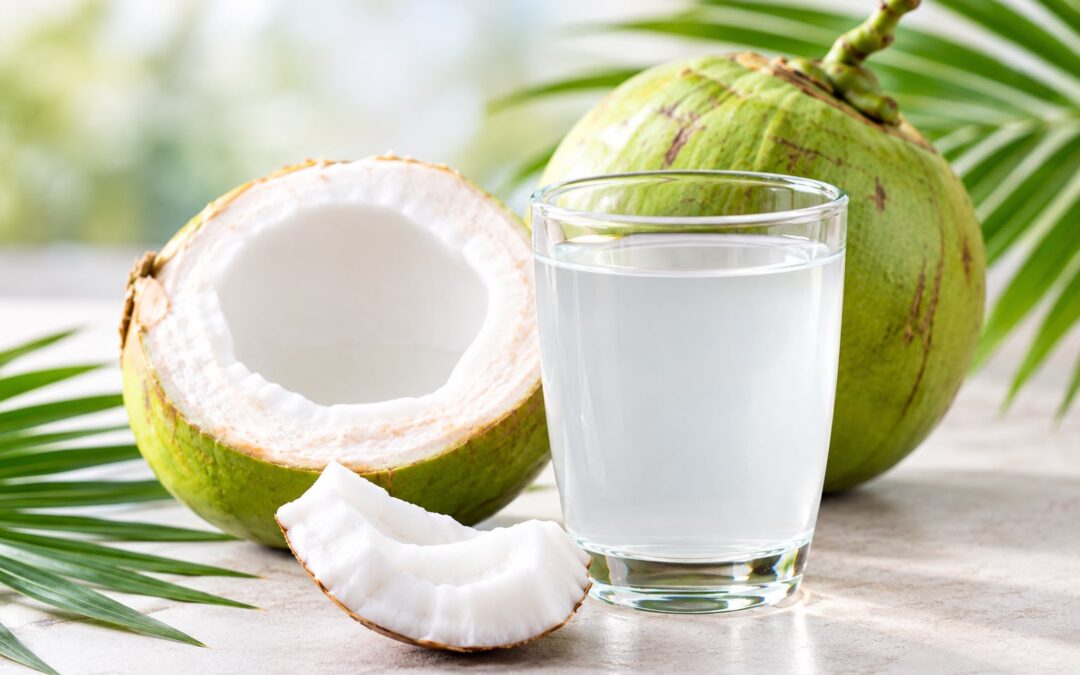
Coconut Water as a Versatile Food Ingredient: Composition, Processing Stability, Food-Matrix Interactions, Industrial Applications, and a Technical Assessment of a Commercial Aseptic Ingredient
Abstract
Coconut water (Cocos nucifera L.) is the naturally occurring liquid endosperm of the coconut and is used in beverages and as an ingredient in formulated foods. Its commercial value is associated with its characteristic coconut aroma, mild sweetness, aqueous composition, and naturally occurring soluble solids and minerals. However, composition varies with cultivar, maturity, growing conditions, and processing; coconut water is also susceptible to enzymatic, microbial, colour, and flavour changes. This review discusses the ingredient from a food-science and industrial-formulation perspective, including compositional variability, processing and storage, food-matrix interactions, and applications across beverage, dairy, frozen dessert, bakery, confectionery, sports-nutrition, and culinary systems. Particular attention is given to the supplied Material Data Sheet (MDS) for product code 3991.05, which identifies an aseptic, preservative-free coconut water ingredient with no added ingredients, a refractometric-solids specification of 3.6–5.2 °RS, pH ≤6.0, and typical single-strength Brix of 3.6. The sheet describes the material as commercially sterile and gives typical uses in foods and beverages, subject to applicable legal limits. These are supplier-specific statements and should be confirmed against the current batch Certificate of Analysis (CoA) and the customer’s process. Importantly, this specification describes coconut water, not a high-Brix coconut water concentrate. The article therefore distinguishes documented product attributes from general scientific evidence and from proposed commercial positioning. The principal purchasing rationale is the combination of an identifiable specification, aseptic handling, no added preservatives or other ingredients, and formulation versatility—not unverified claims of superior nutrition, longer shelf life in every application, or equivalence to concentrate.
Keywords
Coconut water; Cocos nucifera; aseptic ingredient; food formulation; beverage development; processing stability; sensory quality; Brix; quality assurance; ingredient selection.
1. Introduction
Coconut water is the clear liquid endosperm inside the coconut fruit and should be distinguished from coconut milk and coconut cream, which are produced primarily from the solid kernel. Coconut water has gained commercial attention as a beverage base and food ingredient because it contributes a recognisable tropical sensory profile and naturally occurring sugars and minerals [1–3]. Its composition is not fixed: the maturity of the fruit, cultivar, geography, post-harvest handling, and processing can alter soluble solids, mineral profile, aroma, colour, and other quality attributes [1,2]. For manufacturers, successful use requires more than selecting an ingredient with a suitable flavour. The supplier specification, ingredient identity, process compatibility, microbiological status, storage conditions, and regulatory status all need to be checked against the finished product and the market in which it will be sold [1,3,4].
2. Coconut Water Requirements and the Concept of Functional Ingredient Quality
For procurement, a product name alone is not enough. Buyers should define the required form (single-strength coconut water, concentrated coconut water, powder, or a flavoured blend), target Brix, pH, sensory profile, microbiological criteria, packaging, storage temperature, and intended process. The supplied MDS identifies product 3991.05 as “Coconut Water,” preservative status “None,” and processing form “Aseptic.” It lists refractometric solids of 3.6–5.2 °RS and pH ≤6.0; the typical single-strength Brix is 3.6 [5]. °RS and °Bx should not be assumed to be analytically identical under all methods or conditions; the supplier’s specified method and the current CoA should govern acceptance. Because the specification is low-Brix and explicitly reports a single-strength value, it should not be marketed or technically treated as a high-solids concentrate without separate documentation [5,6].
3. Natural Sources and Commercial Forms of Coconut Water
3.1. Natural coconut water. Coconut water composition changes during fruit development. Research reviews describe variability in sugars, minerals, amino acids, vitamins, and aroma compounds across maturity stages and growing conditions [1,2]. These variations are important when fresh raw material is used directly, because a natural ingredient can vary between harvests.
3.2. Commercial coconut water ingredients. Commercial forms may include chilled or frozen raw coconut water, pasteurised or aseptically processed single-strength water, concentrated coconut water, and dried/powdered formats. They are not interchangeable: each has different solids content, handling needs, cost-in-use, sensory intensity, and reconstitution requirements [1,3,4]. The supplied product is documented as aseptic coconut water, not as concentrate or powder [5].
4. Chemical Form and Composition of Coconut Water
Coconut water is a complex aqueous food matrix rather than a single purified compound. It contains water, soluble carbohydrates, mineral ions, and smaller amounts of other naturally occurring constituents; their levels depend on raw material and processing [1,2]. The supplied MDS provides the following typical nutritional values per 100 g: energy 18 kcal; protein 0.4 g; total carbohydrate 3.2 g, including sugars 3.2 g; fat 0.4 g; saturated fat 0.2 g; sodium 134 mg; potassium 342 mg; calcium 35 mg; iron 0.1 mg; ash 0.5 g; and water 95.6 g [5]. The supplier notes that these values draw on McCance and Widdowson’s and/or USDA and supplier data, and labels them typical rather than batch-specific analytical guarantees [5]. These figures must not be presented as a guaranteed nutrition declaration for every delivery. Finished-product labelling should be based on the applicable jurisdiction and appropriate analytical or calculation procedures.
5. Production and Preservation Methods
5.1. Extraction and clarification. Coconut water is obtained from the liquid endosperm. Raw-material handling and hygienic extraction are important because exposure to air and equipment can initiate microbial and biochemical deterioration [1,3].
5.2. Thermal processing. Pasteurisation and sterilisation are widely used to improve microbiological stability, but heat can change aroma, colour, and some chemical constituents. The magnitude depends on the time–temperature profile and the starting material [3,4,7].
5.3. Aseptic processing. Aseptic systems combine appropriate product treatment with sterile packaging and controlled filling. The supplied MDS describes product 3991.05 as aseptic and commercially sterile, and lists a pasteurisation critical/control point of 139.5 °C for 6 seconds plus filtration at 2000 microns [5]. These are supplier-documented process details, not a substitute for a customer’s own hazard analysis, validation, or batch documentation.
5.4. Emerging non-thermal technologies. High-pressure processing, pulsed electric fields, UV-based treatments, ultrasound, cold plasma, ozone, and membrane technologies have been investigated to preserve coconut water quality while controlling microorganisms and enzymes [3,4]. Their commercial suitability depends on equipment, process validation, packaging, and local regulation; they should not be presumed to apply to the supplied ingredient unless confirmed by the supplier.
6. Quality Retention and Practical Availability
For an industrial ingredient, “availability” means that the material can be received, stored, handled, and dosed reliably within the factory’s production plan. Aseptic delivery can simplify handling compared with fresh coconut water, but the actual benefit depends on pack format, unopened storage conditions, transport controls, and the customer’s post-opening procedures. The supplied MDS provides retesting intervals from delivery of 2 months below 20 °C, 4 months below 10 °C, 6 months at 0–5 °C, and 12 months at −18 °C; it states that these are periods to retesting for continued suitability, not necessarily a guaranteed shelf life [5]. The MDS also recommends chilled or frozen storage if colour is critical [5]. Buyers should obtain current shelf-life confirmation, pack-specific storage instructions, and an unopened/opened-pack handling protocol before setting inventory policies.
7. Factors Affecting Ingredient Performance
Performance can be influenced by raw-material maturity, batch-to-batch composition, Brix, pH, mineral content, oxygen exposure, light, temperature, heat treatment, packaging, dilution ratio, and interactions with other ingredients [1–4,7]. The product may also become more yellow over time, as explicitly noted in the supplied MDS [5]. Accordingly, customers should assess the ingredient in the final formula rather than infer performance from a water-only bench test or a supplier’s typical values.
8. Coconut Water and Consumer-Oriented Product Concepts
Coconut water is often positioned in refreshing beverages and hydration-oriented concepts because it supplies water, soluble carbohydrates, and naturally occurring minerals [1,2]. However, composition varies and the presence of potassium or other minerals does not by itself establish a clinical hydration benefit or make a finished product equivalent to an oral rehydration solution. Any sports, electrolyte, or health claim must be supported by the finished product’s composition and comply with the target market’s regulations. The supplied ingredient’s typical sodium and potassium values may help preliminary formulation, but they should be verified for the actual batch and should not be treated as guaranteed values [5].
9. Sensory Characteristics and Flavour Design
The MDS describes a clear-to-translucent, mobile liquid with a characteristic coconut aroma and warns that it may turn yellowish over time [5]. Coconut water’s aroma is complex and can be affected by cultivar, maturity, and processing [2,7]. In development, evaluate aroma authenticity, sweetness, aftertaste, colour, clarity, and the effect of any added flavour system. Citrus, tropical fruit, tea, botanical, and mild savoury notes may be explored as formulation options, but compatibility and consumer acceptance require sensory testing. A product should not be described as colour-stable or neutral-flavoured unless that has been established under the intended storage and processing conditions.
10. Coconut Water and Shelf-Life / Storage
Coconut water is susceptible to quality deterioration, and processing can change volatile compounds, colour, and chemical composition [3,4,7]. Shelf-life decisions should be based on the ingredient’s own validated specification and the finished formulation. The supplier’s retesting schedule should not be interpreted as a universal finished-product shelf life. A customer should assess microbial stability, colour, aroma, pH, Brix, package integrity, and any relevant chemical or sensory markers through the proposed distribution conditions. Accelerated storage can be useful for screening, but it should not replace real-time validation when shelf life is being assigned.
11. Coconut Water in Combination with Other Ingredients
Coconut water is commonly blended with fruit juices, purées, sweeteners, acids, flavours, vitamins, minerals, plant extracts, and other beverage components. Such blends can change sweetness, acidity, ionic balance, colour, haze, and flavour perception. Mineral-containing matrices may also affect clarity or stability depending on the formulation. These effects are formulation-specific; no universal claim should be made that coconut water always improves or destabilises another ingredient. Pilot trials should reproduce the actual processing sequence, packaging, and storage conditions [1,3,4].
12. Interaction with Food-Matrix Components
The food matrix influences ingredient performance through pH, soluble solids, minerals, proteins, fats, hydrocolloids, and processing conditions. In beverages, the principal concerns are often sensory balance, clarity, sediment, and stability. In dairy and plant-protein systems, the acidity and mineral composition of the complete formula can affect protein stability. In frozen desserts, soluble solids contribute to freezing-point depression and sweetness, while the low solids level of single-strength coconut water may require adjustment of the overall recipe. These are standard formulation considerations and must be validated for each recipe rather than assumed from the ingredient name alone [1,3].
13. Interaction with Acids and pH
The supplied MDS specifies pH ≤6.0, not a single fixed pH value [5]. If the ingredient is combined with citric, malic, lactic, or phosphoric acid, the final pH should be measured after all ingredients are added. Acidification may alter flavour, colour, and microbial control requirements, but it should not be treated as a substitute for a validated preservation process. The pH of the incoming ingredient alone does not establish the pH or safety of the finished product.
14. Interaction with Polyphenols and Plant Extracts
Tea, coffee, cocoa, botanical extracts, and fruit ingredients may introduce polyphenols, pigments, and compounds that influence bitterness, astringency, haze, or colour. Coconut water can be used as a liquid base in such systems, but the outcome depends on the extract and process. Testing should include colour and turbidity over time, flavour balance, and sediment formation where relevant. Evidence from one botanical beverage should not automatically be transferred to another matrix [3,7].
15. Interaction with Sugars and Carbohydrates
The supplied MDS lists 3.2 g carbohydrate and 3.2 g sugars per 100 g as typical values [5]. This makes the ingredient a source of some naturally present sugars, but it is not a high-solids sweetener or a concentrate. When used in reduced-sugar products, the contribution of coconut-water sugars must be included in the formulation and nutrition calculation. In high-solids systems such as syrups, confectionery, and gummies, the water introduced by coconut water may affect cooking time, water activity, texture, and microbial stability. These effects need process-specific adjustment.
16. Oxidative, Colour, and Flavour Stability
Colour and aroma are key quality attributes of coconut water. The supplier specifically notes that the liquid may turn yellowish over time and advises chilled or frozen storage if colour is critical [5]. Published work also indicates that thermal processing can alter coconut water’s chemical profile and that colour development can be associated with changes in constituents [7]. Control of oxygen exposure, light, time, temperature, and packaging may help, but the appropriate strategy should be established through trials. Do not promise that the ingredient will retain its original colour throughout shelf life without supporting data.
17. Coconut Water in Beverage Formulation
Beverages are a direct and important application area. Potential concepts include ready-to-drink coconut water, fruit-coconut blends, tropical drinks, sparkling beverages, tea blends, mocktail bases, smoothies, and beverage concentrates made by the customer through further formulation. For product 3991.05, the MDS explicitly identifies foods and beverages as typical uses and advises dilution as appropriate while observing legal limitations [5]. The ingredient’s low single-strength Brix means formulators seeking a high-Brix base or reduced shipping volume should compare it with a separately specified concentrate. Key tests include Brix, pH, sensory quality, clarity, heat-process compatibility, microbiological validation, and storage stability.
18. Coconut Water in Functional and Fruit Beverages
Fruit beverages can use coconut water to contribute a tropical sensory note and an alternative liquid base. Pineapple, mango, passion fruit, citrus, berry, and other fruit profiles may be screened for sensory compatibility. Acidity, pulp, pectin, minerals, and flavour compounds can change haze and stability; therefore, pilot blends should be evaluated after processing and throughout storage. If the final product is promoted for hydration, electrolytes, energy, or other physiological effects, the claim must be assessed against the finished composition and applicable regulations [1,2].
19. Coconut Water in Dairy and Plant-Based Beverages
Coconut water may be explored in dairy-based or plant-based drinks where a tropical flavour profile is desired. However, it should not be confused with coconut milk, coconut cream, or coconut-derived fat. Coconut water is a low-fat aqueous ingredient, whereas coconut milk and cream are made primarily from the kernel and have substantially different compositional and emulsification properties [1,2]. In dairy or plant-protein formulations, assess pH, heat stability, protein aggregation, mineral interactions, flavour, and sediment. The ingredient should be added at a point in the process established by pilot testing and process validation.
20. Coconut Water in Frozen Desserts and Confectionery
In sorbets, ice pops, fruit ices, and frozen beverages, coconut water can contribute water, modest sweetness, and a coconut note. Its low soluble-solids content means it will not alone provide the solids, body, or freezing-point control normally required for a balanced frozen dessert. Sugars, stabilisers, fruit solids, and other components may be needed depending on the recipe. In gummies, jellies, and confectionery, water addition and heat exposure must be controlled to achieve the target texture and water activity. The suitability of aseptic liquid coconut water in these applications should be confirmed through formulation and microbiological assessment.
21. Coconut Water in Bakery and Culinary Applications
Potential applications include tropical fillings, glazes, sauces, marinades, soups, rice dishes, and selected bakery formulations. In heated systems, aroma loss, colour change, evaporation, and interactions with sugars and proteins may occur. Because the ingredient is mostly water, recipes may need adjustment to maintain dough or batter hydration and final texture. The ingredient should not be described as a direct substitute for coconut milk, cream, or oil where fat, emulsification, or richness is functionally required.
22. Comparison of Major Coconut Ingredient Forms
A useful purchasing comparison distinguishes product form rather than relying only on the word “coconut.”
| Attribute | Supplied product 3991.05 | Coconut water concentrate | Buyer implication |
| Product identity | Coconut water | Concentrated coconut water; separate spec needed | Do not treat forms as equivalent |
| Soluble solids | 3.6–5.2 °RS; typical single-strength Brix 3.6 | Typically higher; actual value must be specified | Choose by target formula and cost-in-use |
| Added ingredients | None declared | Depends on supplier/specification | Verify full ingredient declaration |
| Supply format | Aseptic, per MDS | Depends on product and pack | Check storage and handling |
| Applications | Foods and beverages, subject to legal limits | Often useful where high solids or reconstitution is required | Pilot-test in intended application |
| Key documentation | Current MDS and batch CoA | Current concentrate specification and CoA | Request batch-specific proof |
23. Aseptic Coconut Water Ingredient Technology
The supplied product sheet describes code 3991.05 as aseptic, with no preservative, no added ingredients, no processing aids, and a commercially sterile microbiological description [5]. These attributes can be valuable to manufacturers seeking a coconut-water ingredient without added preservatives, provided the actual packaging and storage conditions are followed. The supplier’s statement that the product is manufactured in accordance with current UK legislation and EC directives is part of the MDS; buyers should request current declarations and market-specific compliance documents for their own due diligence [5].
24. Scientific and Commercial Advantages of a Well-Specified Coconut Water Ingredient
24.1. Defined incoming specification. A documented Brix range and pH limit create a basis for incoming inspection, although the actual batch CoA remains essential [5].
24.2. Aseptic presentation. Aseptic processing and packaging can support controlled industrial handling when used according to validated supplier instructions [3,5].
24.3. No added ingredients declared. The MDS lists coconut water as the sole ingredient and states no additives or preservatives [5]. This may suit formulations seeking a simple ingredient declaration, subject to the final label and applicable rules.
24.4. Formulation flexibility. The supplier lists foods and beverages as typical uses, allowing product developers to screen the ingredient across multiple categories [5].
24.5. Traceability and documentation. The product code and issue-controlled MDS provide a starting point for specification management. For each delivery, the buyer should request batch-specific CoA, traceability information, packaging details, and current regulatory documentation.
These are practical purchasing advantages. They do not by themselves prove superior flavour, lower cost, better nutrition, or longer finished-product shelf life than competing ingredients.
25. Important Scientific Qualification of Nutrition and Health Claims
Coconut water contains naturally occurring sugars and minerals, but claims such as “detoxifying,” “therapeutic,” “prevents disease,” or “clinically superior hydration” should not be inferred from general compositional data. Reviews discuss a range of potential biological effects, but evidence quality, dose, population, and study design vary [1,2]. For commercial communications, it is safer to emphasise documented ingredient facts—such as coconut-water identity, the supplier’s stated absence of added preservatives, aseptic presentation, and specified technical parameters—rather than medical or disease-related benefits. Any nutrition or health claim must comply with the laws of the target market and be substantiated for the finished product.
26. Recommended Experimental Design for Product Development
A practical trial should compare: (A) the current formula/control; (B) a low inclusion level of coconut water; (C) the target inclusion level; and (D) a higher inclusion level where technically justified. If concentrate is an alternative, compare equivalent coconut-derived soluble solids or a defined sensory target rather than equal ingredient weights. Record the supplier lot, ingredient temperature, Brix, pH, addition order, process parameters, and packaging. Evaluate sensory profile, colour, turbidity, sediment, and process yield immediately after production and during storage. Replicate trials where possible and predefine acceptance criteria before selecting a preferred formulation.
27. Recommended Coconut Water Stability Study
A stability plan should be adapted to the intended shelf life and storage route. A practical schedule may include Day 0, 7, 14, 30, 60, and 90 for early development, followed by longer real-time testing if needed. At baseline, record Brix, pH, colour, aroma, appearance, turbidity, and relevant microbiological measures. After processing, assess sensory retention, colour change, package integrity, and any process-specific quality markers. During storage, monitor the same attributes under the proposed distribution conditions. Include a chilled or frozen condition if colour is critical, consistent with the supplier’s note [5]. These proposed time points are a development framework, not supplier-validated shelf-life data.
28. Recommended Analytical and Quality-Control Methods
28.1. Soluble solids. Measure Brix using a calibrated refractometer and the agreed temperature correction and method. Compare results with the supplier’s specified attribute and do not silently substitute °Bx for °RS.
28.2. pH. Use a calibrated pH meter and document sample temperature and method.
28.3. Identity and sensory profile. Confirm the coconut-water identity, characteristic aroma, colour, appearance, and absence of unexpected off-notes.
28.4. Microbiological status. Request supplier documentation and apply risk-based testing appropriate to the product, packaging, and customer process. The MDS’s “commercially sterile” description should be understood within its stated supply context and does not replace finished-product process validation [5].
28.5. Nutrition and minerals. Use batch-specific analysis or a justified regulatory-compliant calculation for label declarations. The typical values in the MDS are not guaranteed batch values [5].
28.6. Contaminants and compliance. Obtain current heavy-metal, pesticide, microbiological, allergen, GMO, and other relevant statements or results as required by the buyer and target market. The MDS provides some allergen and GMO declarations, but customers should review the complete current document and cross-contact controls [5].
29. Evaluation of Formulation Suitability
A staged evaluation can reduce development risk. Stage 1: verify supplier documents, product identity, CoA, packaging, and storage conditions. Stage 2: perform bench-scale formulation tests and confirm Brix, pH, sensory compatibility, and appearance. Stage 3: run a pilot through the intended heat treatment, filling, or freezing process. Stage 4: conduct microbiological and shelf-life validation in the final package. Stage 5: review label declarations, legal status, allergen controls, and market-specific requirements. This sequence helps distinguish raw-ingredient compliance from finished-product performance.
30. Evaluation of Functional and Commercial Performance
Technical suitability and commercial success are separate outcomes. Technical evaluation may include reproducibility, processability, sensory quality, colour retention, and microbiological performance. Commercial evaluation may include cost-in-use, supply reliability, packaging efficiency, minimum order quantity, lead time, documentation responsiveness, and customer acceptance. A cheaper price per kilogram is not necessarily the lowest cost-in-use if the ingredient requires additional processing, storage, flavour correction, or higher inclusion levels. Conversely, an aseptic single-strength ingredient may not be the economical choice when a formulation requires high solids or concentrated transport.
31. Expected Outcomes from Using the Ingredient
When the product is compatible with the recipe and process, the ingredient may provide a characteristic coconut-water sensory contribution and a convenient aqueous base for food and beverage development. Its documented attributes include aseptic presentation, no added ingredients, no added preservatives, refractometric solids of 3.6–5.2 °RS, pH ≤6.0, and typical single-strength Brix of 3.6 [5]. Actual results depend on the batch, inclusion level, process, and storage. No universal performance or health benefit should be promised without product-specific evidence.
32. Quality-Control Requirements Before Purchase
Before approving a supplier or lot, request: (1) current product specification/MDS; (2) batch-specific CoA; (3) product identity and country of origin; (4) Brix/soluble-solids and pH results; (5) microbiological specification and supporting documentation; (6) packaging type and aseptic integrity information; (7) storage and handling instructions; (8) shelf life or retesting policy; (9) allergen and cross-contact statement; (10) GMO statement; (11) contaminant compliance data where required; (12) nutrition data and its source; (13) process description; (14) traceability and recall arrangements; (15) regulatory declarations for the destination market; and (16) written confirmation whether the product is single-strength or concentrated. The supplied MDS contains useful starting information but is dated 31 August 2023, so buyers should obtain the current revision and lot-specific documentation before final approval [5].
33. Comparison with the Supplied Commercial Product
The following comparison is based on the supplied MDS and should be confirmed against current documentation [5].
| Parameter | MDS statement | Purchasing interpretation |
| Product / code | Coconut Water / 3991.05 | Not labelled as concentrate |
| Preservative | None | No added preservative declared |
| Ingredients | Coconut Water | Single ingredient as listed |
| Processing form | Aseptic | Follow supplier’s storage and pack instructions |
| Refractometric solids | 3.6–5.2 °RS | Use supplier method; verify on CoA |
| pH | ≤6.0 | Not a single fixed pH value |
| Typical single-strength Brix | 3.6 | Consistent with single-strength identity |
| Microbiological description | Commercially sterile | Request current lot documents and validate final process |
| Origin | Philippines (manufacture and raw material) | Confirm current origin documentation |
| Colour note | May turn yellowish over time | Use chilled/frozen storage if colour is critical |
34. Important Qualification: Coconut Water versus Coconut Water Concentrate
Coconut water and coconut water concentrate are different ingredient forms. Concentration removes part of the water and increases soluble solids; concentrate therefore typically has a substantially higher Brix than single-strength coconut water and is often used after controlled dilution or as a high-solids ingredient. The supplied MDS gives a typical single-strength Brix of 3.6 and a specified refractometric-solids range of 3.6–5.2 °RS [5]. Accordingly, the attached document does not substantiate a claim that this is coconut water concentrate. If the company’s actual commercial product is a concentrate, a separate concentrate specification is required before making claims about its Brix, concentration factor, reconstitution ratio, freight efficiency, or cost-in-use. Codex and European regulatory materials distinguish juice obtained directly from the fruit from juice reconstituted from concentrate, supporting the importance of correct product naming [6].
35. Discussion: Why Should a Customer Buy This Product?
A credible value proposition should link each selling point to a documented attribute or a testable customer benefit. For the product described in the supplied MDS, the strongest points are:
- Aseptic supply format: potentially useful for industrial handling and planned production, subject to package and storage instructions.
• No added preservatives and no other ingredients declared: suitable for manufacturers seeking a coconut-water ingredient without those additions, subject to verification and local labelling rules.
• Defined technical parameters: Brix/soluble-solids range and pH limit support incoming quality checks.
• Broad stated use: the supplier lists foods and beverages as typical applications.
• Origin and documentation: the MDS states that manufacture and raw-material origin are the Philippines, and includes allergen, GMO, storage, and process information [5].
• Development flexibility: the ingredient can be evaluated in RTD beverages, fruit blends, smoothies, selected dairy or plant-based drinks, frozen desserts, sauces, and other recipes where a water-based coconut note is appropriate.
Customers should not be told that this product is more concentrated, more nutritious, more stable, or cheaper than competitors unless comparative evidence supports that statement. A strong sales process would offer a current MDS, batch CoA, samples, application guidance, and a jointly agreed pilot protocol. For a buyer choosing between this product and a concentrate, compare the intended application, required Brix, sensory impact, dilution, shipping and storage, and total cost-in-use—not only the unit price.
36. Final Scientific Conclusion
Coconut water is a versatile aqueous ingredient with a characteristic sensory profile and naturally occurring soluble solids and minerals. Its use in industrial food systems requires attention to raw-material variability, processing, colour and aroma stability, pH, Brix, packaging, microbiological control, and finished-product validation [1–4,7]. The supplied specification for product 3991.05 identifies an aseptic coconut water with no added ingredients or preservatives, refractometric solids of 3.6–5.2 °RS, pH ≤6.0, and typical single-strength Brix of 3.6 [5]. These documented properties provide a rational basis for evaluating the ingredient in food and beverage applications. The most defensible purchasing case is specification transparency, aseptic presentation, ingredient simplicity, and the opportunity to formulate across several product categories. However, the supplied document is not a concentrate specification. A current MDS, batch-specific CoA, application trials, and market-specific compliance review should be obtained before purchase approval or external product claims.
References
- Prades A, Dornier M, Diop N, Pain J-P. Coconut water uses, composition and properties: a review. Fruits. 2012;67(2):87–107. https://doi.org/10.1051/fruits/2012002.
- Yong JWH, Ge L, Ng YF, Tan SN. The chemical composition and biological properties of coconut (Cocos nucifera L.) water. Molecules. 2009;14(12):5144–5164. https://doi.org/10.3390/molecules14125144.
- Prades A, Dornier M, Diop N, Pain J-P. Coconut water preservation and processing: a review. Fruits. 2012;67(3):157–171. https://doi.org/10.1051/fruits/2012009.
- Mahnot NK, Mahanta CL, Keener KM, Mis Solval K. Emerging non-thermal processing techniques for preservation of tender coconut water. LWT. 2022. See review record: https://www.sciencedirect.com/science/article/abs/pii/S0023643821010033
- Gerald McDonald & Company Limited. Material Data Sheet: Coconut Water, product code 3991.05, Issue 4. Dated 31 August 2023. Supplied technical document.
- European Commission. Proposal concerning the designation of coconut juice/coconut water and reconstituted concentrated coconut juice; references Codex General Standard for Fruit Juices and Nectars (CXS 247-2005). EUR-Lex document 52023PC0201. https://eur-lex.europa.eu/legal-content/EN-HU/ALL/?from=EN&uri=CELEX%3A52023PC0201.
- Cunha AG, Alves Filho EG, Silva LMA, Ribeiro PRV, Rodrigues THS, de Brito ES, de Miranda MRA. Chemical composition of thermally processed coconut water evaluated by GC-MS, UPLC-HRMS, and NMR. Food Chemistry. 2020;324:126874. https://doi.org/10.1016/j.foodchem.2020.126874.
- Shi S, Wang W, Wang F, Yang P, Yang H. Research progress in coconut water: a review of nutritional composition, biological activities, and novel processing technologies. Foods. 2025;14(9):1503. https://doi.org/10.3390/foods14091503.
